
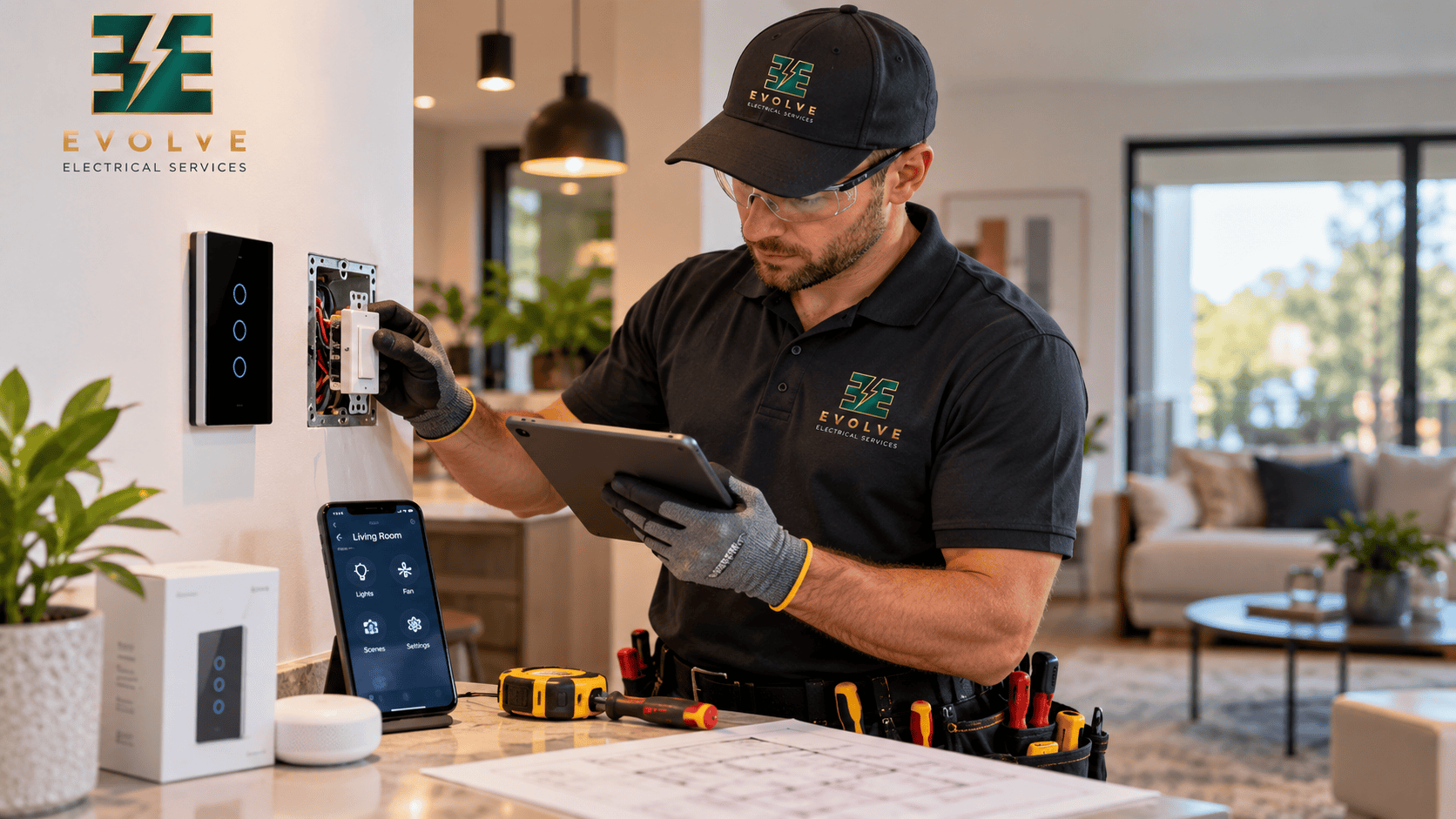
A light switch looks like a small part of a home’s electrical system, but the type of switch you choose can affect convenience, lighting control, energy use, and even how well your home fits into a wider smart home setup.
For Calgary homeowners, the choice between a traditional switch and a smart switch also deserves some local consideration. Older homes may have different wiring configurations from newer builds, while cold-weather conditions make reliable electrical systems particularly important. A switch that works perfectly in one property may not be the right fit for another.
If you are considering smart switch installation Calgary, it helps to understand what you are actually gaining before replacing every conventional switch in the house.
This guide compares traditional and smart switches, explains where each option makes sense, and covers practical considerations such as Wi-Fi switches, lighting control, voice assistants, energy savings, and compatibility with existing electrical wiring. It also explains when smart lighting installation Calgary can be a worthwhile upgrade and when a traditional switch may still be the more practical choice.
Traditional Switches vs Smart Switches: What Is the Difference?
A traditional wall switch performs a straightforward job: it opens or closes an electrical circuit to control a light or fixture.
A smart switch does the same basic electrical job but adds electronic controls and connectivity. Depending on the model, it may communicate through Wi-Fi, a dedicated smart-home protocol, Bluetooth, or another wireless technology.
A smart switch can potentially allow you to:
The important point is that a smart switch is not simply a traditional switch with an internet connection. It contains additional electronics and therefore has different installation, compatibility, and maintenance considerations.
For a homeowner planning smart switch installation Calgary, checking the existing electrical setup before purchasing switches can prevent many common problems.
Smart Switches: Where They Make Sense in a Calgary Home
Smart switches are particularly useful when you want lighting to respond to how you actually use your home.
Consider a family arriving home after work on a dark winter evening. Instead of walking through a dark entryway and manually switching several lights on, a scheduled or automated lighting routine could activate selected fixtures around the time the family normally arrives.
Another practical example is an upstairs hallway. A smart switch can be programmed around your household’s routine, allowing lights to operate according to a schedule or through compatible controls.
Smart switches can also be useful in rooms where you regularly forget to turn lights off.
Wi-Fi Switches and Remote Control
Many homeowners choose Wi-Fi switches because they can connect directly to a home’s wireless network.
This can allow control through an app, depending on the manufacturer’s system. However, homeowners should not assume that every Wi-Fi switch works in exactly the same way.
Before buying, check:
A reliable installation begins with compatibility rather than simply choosing the switch with the longest feature list.
Voice Assistant Integration
Voice control is another reason homeowners consider smart switches.
A compatible switch can potentially be linked with a voice assistant, allowing commands such as turning a bedroom or kitchen light on or off without physically touching the wall switch.
This can be especially convenient when your hands are occupied, when you are carrying groceries, or when you want to control several lights together.
However, voice control should be viewed as an additional interface, not the only method of operating the light. A good installation should preserve practical physical control for everyday use.
Home Automation: More Than Turning Lights On and Off
The biggest difference between a smart switch and a traditional switch is not the switch itself. It is what the switch can become part of.
This is where home automation Calgary becomes relevant.
Instead of treating every light as an independent fixture, automation can connect lighting to routines and conditions.
For example:
Morning routine
Away routine
Evening routine
These scenarios can make a home feel more convenient without requiring homeowners to constantly operate an app.
The best automation is often the automation you barely notice because it fits naturally into your routine.
Smart Lighting Installation Calgary: When It Is Worth Considering
Smart lighting installation Calgary can make sense when the homeowner has a clear reason for upgrading rather than simply wanting the newest technology.
Some strong use cases include:
1. Hard-to-Reach Lights
If a light switch is inconveniently positioned, smart control can provide an additional way to operate the fixture.
2. Multiple Lighting Zones
Open-plan homes can have several lighting zones. Smart controls may make it easier to manage them individually or as groups.
3. Regular Daily Routines
If your household follows a predictable schedule, automated lighting can reduce the number of manual actions required throughout the day.
4. Remote Control
A smart system can be useful when you want to check or control selected lights while away from home.
5. Future Smart-Home Expansion
If you are gradually building a smart home, smart switches can provide a useful foundation for integrating lighting with other compatible devices.
Electrical Upgrades: What Should Be Checked Before Installation?
A common mistake is to purchase a smart switch first and worry about installation later.
The better approach is to assess the electrical configuration before selecting the hardware.
Neutral Wire Requirements
Some smart switches require a neutral conductor at the switch box. Others are designed to operate without one.
This matters because wiring configurations can vary between properties, particularly in older homes.
Do not assume that because a traditional switch is currently installed, every smart switch will automatically be compatible with the existing wiring.
Switch Box Space
Smart switches generally contain more electronics than basic mechanical switches.
That can mean a deeper device or a more crowded electrical box.
If the box is already tightly packed, the installation may require additional care.
Load and Fixture Compatibility
The switch must be compatible with the electrical load and the lighting fixture.
This becomes particularly important with LED lighting, low-wattage fixtures, and dimming applications.
Grounding and Electrical Safety
The installation should follow applicable electrical requirements and manufacturer instructions.
A switch should not be installed simply because its terminals appear to match the old switch. Electrical conductors need to be correctly identified and connected.
Dimmer Switch Installation Calgary: Smart or Traditional?
Dimming is a separate consideration from basic switching.
A conventional dimmer can provide straightforward control over light intensity. A smart dimmer adds connectivity and potentially allows the brightness level to be controlled remotely or through automation.
For dimmer switch installation Calgary, fixture compatibility is particularly important.
Not every LED bulb is compatible with every dimmer. Flickering, buzzing, limited dimming range, or unexpected shutoff can occur when incompatible components are combined.
Before installing a dimmer, check:
A professional assessment can be worthwhile when replacing older dimmers or upgrading several lighting circuits at once.
Energy Savings: Can Smart Switches Actually Reduce Electricity Use?
Smart switches do not automatically make a light fixture energy efficient.
A smart switch still controls the electrical load connected to it. If a high-consumption light remains on for long periods, adding a smart switch does not fundamentally change the fixture’s energy demand.
The potential for energy savings comes from better control.
For example, automation can help reduce unnecessary operating time by:
The largest improvement may therefore come from combining efficient light sources with sensible controls rather than treating the smart switch itself as an energy-saving device.
When a Traditional Switch Is Still the Practical Choice
Smart technology is not automatically necessary in every room.
A traditional switch can be the better fit when:
A garage utility light, for example, may not need app control.
Likewise, a simple bedroom lamp circuit may not benefit enough from smart functionality to justify replacing a perfectly functional switch.
The objective should be to improve how the home works—not to make every electrical device smart.
Smart Switches vs Traditional Switches: Practical Comparison
| Feature | Traditional Switch | Smart Switch |
| Basic on/off control | Yes | Yes |
| Smartphone control | No | Usually |
| Remote operation | No | Usually |
| Scheduling | No | Usually |
| Voice assistant | No | Compatible models |
| Home automation | Limited | Yes |
| Installation complexity | Generally lower | Generally higher |
| Electronics inside switch | Minimal | More complex |
| Wiring compatibility | Broad | Model-dependent |
| Upfront cost | Lower | Higher |
| Best for | Simple lighting control | Connected and automated homes |
The right choice depends on the home’s wiring, the homeowner’s priorities, and how the lighting is actually used.
Common Mistakes Homeowners Make
Choosing a Smart Switch Without Checking Wiring
This is one of the most avoidable mistakes.
A product may look ideal online but require wiring that is not available at the intended switch location.
Assuming All Smart Switches Work With Every Light
Smart switches and dimmers have compatibility requirements. LED fixtures, transformers, fans, and specialised lighting can require specific controls.
Installing Too Many Smart Devices at Once
A whole-home conversion can become unnecessarily complicated.
A staged approach is often easier: start with the rooms where automation provides the greatest practical benefit.
Ignoring Manual Control
A smart home should still be usable when the internet is unavailable, a phone battery is dead, or someone unfamiliar with the system needs to turn on a light.
Physical controls remain valuable.
Buying Based Only on Price
The cheapest smart switch may not offer the best long-term value.
Consider reliability, firmware support, warranty, compatibility, app quality, and replacement availability.
Expert Tips for Planning a Smart Switch Upgrade
If you are considering smart switch installation Calgary, start with the rooms rather than the technology.
Walk through your home and ask:
This creates a practical upgrade plan instead of a technology-driven one.
Start With High-Use Areas
Living rooms, kitchens, hallways, entrances, and bedrooms often offer more noticeable benefits than low-use spaces.
Keep Your System Consistent
Using compatible devices from a manageable ecosystem can make setup and future troubleshooting easier.
Plan for Future Expansion
If you eventually want smart thermostats, sensors, security devices, or other connected equipment, consider compatibility before committing to a particular smart-home platform.
Don’t Ignore the Existing Electrical System
An experienced electrician should assess the switch box, wiring configuration, circuit, load, and intended device before installation.
This is particularly important when upgrading switches in an older property.
Smart Switches and Calgary’s Seasonal Lifestyle
Calgary’s changing daylight hours can influence how useful automated lighting becomes.
During shorter winter days, some households rely on artificial lighting earlier in the afternoon and evening. During summer, natural daylight may reduce the need for lighting at the same time.
Scheduling can therefore be adjusted seasonally rather than using one fixed routine throughout the year.
For example, an evening lighting routine might be appropriate at one time during winter and considerably later during summer.
This is a practical example of where automation can support a household without replacing common sense.
Final Takeaway
The choice between a traditional switch and a smart switch is ultimately about how you use your home.
Traditional switches remain reliable, straightforward, and inexpensive. Smart switches add another layer of control, allowing lighting to become part of a connected smart home with scheduling, remote access, automation, and compatible voice-assistant features.
For homeowners considering smart switch installation Calgary, the most important step is not choosing the most advanced product. It is determining which rooms genuinely benefit from smart control and then confirming that the electrical wiring, fixtures, load requirements, and selected technology are compatible.
A thoughtful smart lighting installation Calgary plan can therefore combine both technologies. Use smart controls where they solve a genuine everyday problem, and keep traditional switches where simplicity is already the best solution.
That approach delivers an electrical upgrade based on practical household needs rather than technology for its own sake.
Frequently Asked Questions
1. Are smart switches worth installing in an older Calgary home?
They can be, but compatibility should be checked first. Older homes may have switch-box configurations that differ from newer construction, including situations where a required neutral conductor is not present. The age of the property does not automatically prevent smart-switch installation, but the existing wiring should be assessed before selecting the hardware.
2. Do smart switches require Wi-Fi?
Not all smart switches use Wi-Fi. Some use other wireless communication technologies or require a dedicated hub. If you specifically want app-based remote access, check how the switch connects and whether an internet connection is required for the features you want.
3. Can I use a smart switch with LED lights?
Often, yes, but compatibility matters. Some LED fixtures or bulbs may not work correctly with particular switches or smart dimmers. Symptoms of incompatibility can include flickering, buzzing, poor dimming performance, or the light failing to operate correctly. Always check the manufacturer’s compatibility requirements.
4. Is smart lighting better for energy savings?
Smart lighting can help reduce unnecessary lighting use through scheduling and automation, but the switch itself does not automatically reduce the power consumed by a light. Combining efficient LED lighting with sensible lighting control can provide a more meaningful approach to reducing unnecessary electricity use.
5. Should every light in my home be connected to a smart switch?
No. A room-by-room approach is often more practical. Prioritise lights where automation, scheduling, remote access, or voice control solves a real problem. Keeping traditional switches in low-use or simple areas can reduce cost and system complexity while still giving you smart control where it matters.

Evolve Electrical Services is a reputable company providing electrical requirements for your residence or workplace and also industrial needs. We offer an extensive selection of electrical services and always go above and beyond for our clients.


